
Beekeeper’s calculators
Three calculators we use ourselves in the apiary: winter feed, oxalic acid trickling and seeding creamed honey. Enter your numbers and the page works out the rest.
Winter feed – 60% sugar syrup (3:2)
3 parts sugar to 2 parts water, mixed at room temperature. Work out how much water you need and how many litres it makes.
- Warming the water a little helps the sugar dissolve faster. The syrup should be completely clear before you feed.
- Spirit vinegar is not needed. Many beekeepers still add a little (12%) to speed up inversion – the acid helps split the sugar (sucrose) into glucose and fructose, so the bees have less work converting the feed. It works fine without it too.
- We feed a colony on 10 Lågnormal frames about 14 kg of sugar for winter. If the colony has plenty of honey left, you can reduce the amount – if it is strong and out of stores, increase it a little.
- Weigh or heft the hive to see how much stores it already has.
- Finish feeding in good time – ideally by early September – so the bees have time to process and cap the stores.
Oxalic acid – trickle treatment
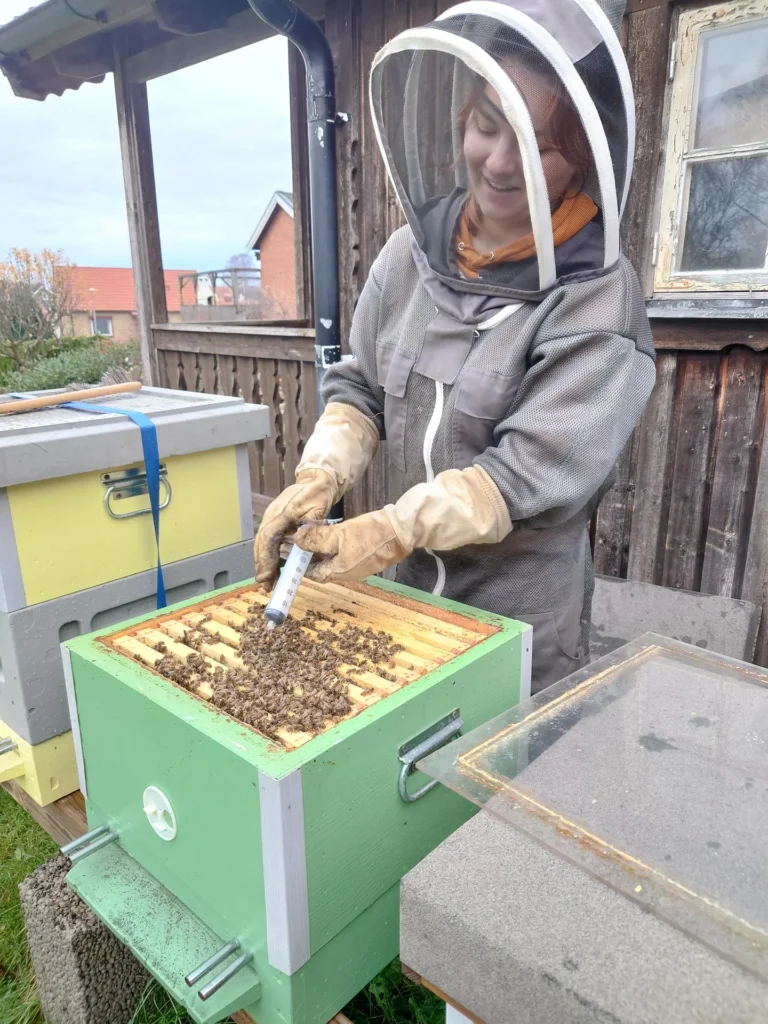
Lukewarm sugar syrup with oxalic acid, trickled directly onto the bees between the frames. We mix 1.6 g oxalic acid, 26 g sugar and 24.2 g water per colony (approx. 40 ml) and dose 30–35 ml – a little extra acid compensates for the crystals possibly having lost strength over time.
- Treat when needed – monitor first. Check the mite load with natural mite drop on the bottom board or an alcohol/wash test. Treatment may be needed several times a season.
- Suitable times: in spring after the cleansing flight, after the honey harvest, and in autumn after winter feeding, once the queen has stopped laying (judge roughly by the temperature) but before the bees have formed a tight winter cluster. If they are already clustered, the solution just runs off and does little good.
- Oxalic acid only works on mites on the bees, not under capped cells. It is therefore most effective when the colony has little or no capped brood. Never treat with honey supers on.
- Treat on a mild day. The solution should be lukewarm (about 30 °C).
- Dose 30–35 ml per colony, about 5 ml per seam of bees. The recipe makes about 40 ml per colony, so you have some margin. Trickle only once per treatment – repeated trickling at short intervals harms the bees.
- Use protective equipment: always wear gloves and safety glasses when handling acids. Also wear a respirator (FFP2) when mixing the oxalic acid solution – oxalic acid is corrosive and the dust must not be inhaled.
- Mix it fresh – the solution breaks down over time and should not be kept until next year.
In Sweden there are approved veterinary medicines containing oxalic acid for varroa, e.g. Api-Bioxal and Oxybee. Always follow current regulations and the product instructions. This calculator is an aid to calculation and does not replace advice from a bee inspector or vet.
Creamed honey – seeding
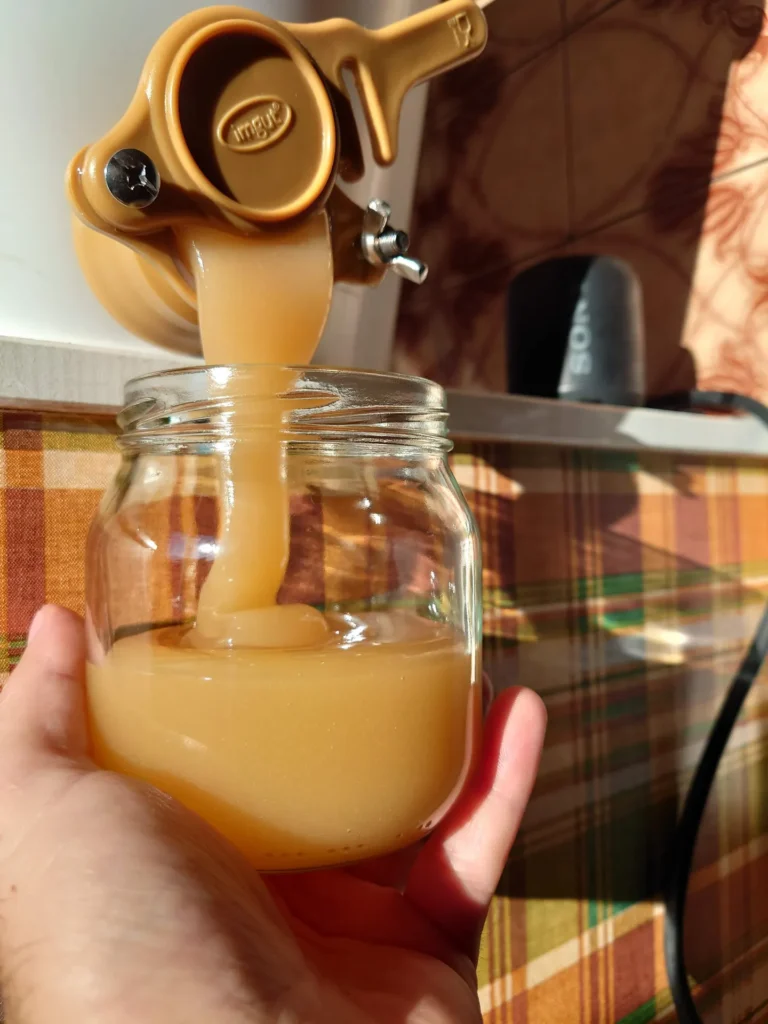
Seeding lets you control crystallisation so the honey becomes fine, smooth and easy to spread. Enter how much freshly extracted honey you have and we’ll work out the amounts.
- Honey crystallises best at about 14 °C. Above 20 °C it is slow.
- The seed should have very fine crystals – use a creamed honey you like, bought or your own.
- Stir with dough hooks or a honey creamer, not so fast that you whip a lot of air into the honey.
Starter method after Uffe Lagerqvist and Lars Jarpner.
Planning to rear queens?
Try our queen-rearing calendar – enter your grafting date and get the whole schedule day by day.